



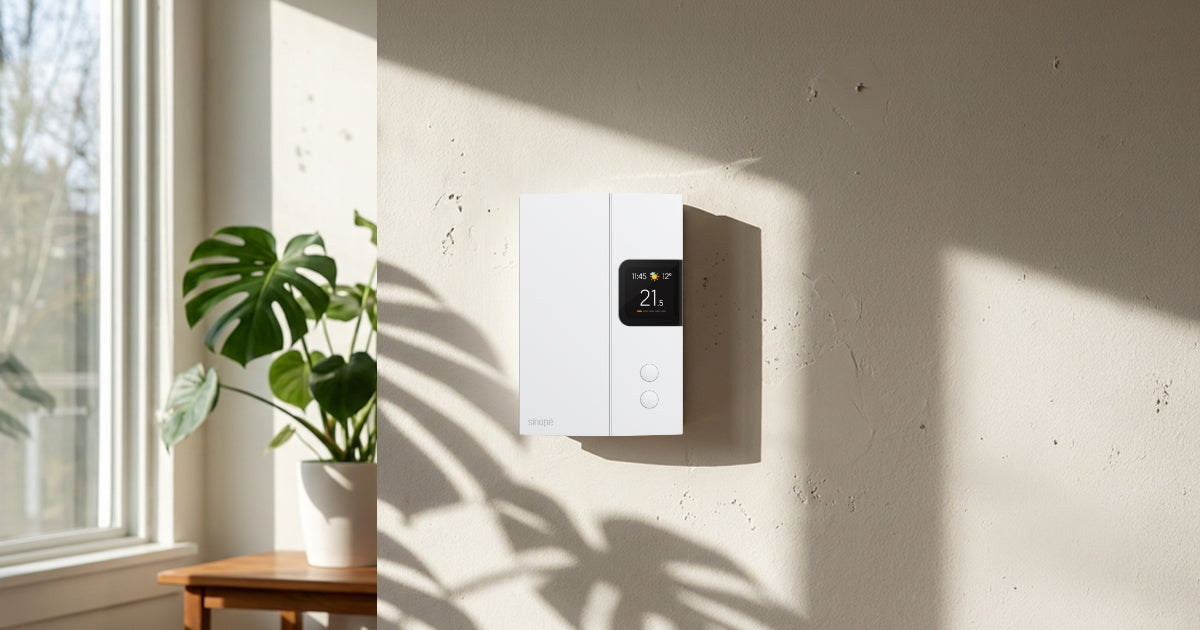
It’s a chilly evening, and you’re settled in with a good book, enjoying the perfect warmth of your home. On the wall, your Sinopé thermostat quietly switches to Eco mode, while a notification from your power utility appears on your phone. Just like that, you’ve become part of a collective movement, without sacrificing an ounce of comfort.
Across the province, thousands of homes are working together to help optimize the energy grid. This isn’t a vision of the distant future. It’s a smarter, more sustainable way of living, already taking shape today.
So why are utilities suddenly so interested in your smart thermostat, water heater controller, or EV charger? The answer lies in Demand Response (DR), a powerful shift in how we use energy at home. At Sinopé, we see DR as a practical solution to today’s energy challenges, one that helps balance the grid while keeping your comfort and peace of mind front and center.

The Challenge: The Growing Demand for Electricity
For decades, the power grid operated on a simple principle: when demand increased, utilities generated more electricity. Think of that familiar early-evening rush: dinner is in the oven, the EV is charging, the heat is running, and bath time begins. Traditionally, the response was simple: produce more power. But that model is becoming increasingly inefficient and unsustainable for three main reasons.
-
A sharp rise in electricity demand: From the rapid adoption of electric vehicles to the growing number of energy-intensive data centers supporting AI, electricity demand is rising fast. Keeping pace by building new transformers, substations, and power lines is a massive challenge.
-
The integration of renewable energy: We all want a cleaner energy future, but renewable sources like wind and solar are inherently variable. They do not always generate electricity when demand is highest. In the past, utilities often filled those gaps by turning to peaker plants: older, carbon-intensive facilities that are expensive to operate and at odds with environmental goals.
-
The cost of traditional infrastructure: Building new energy infrastructure, such as a power plant or transmission line, is a major long-term undertaking. These projects demand substantial financial investment, extensive natural resources, and years of development—putting pressure on both the environment and public finances.
The Sinopé Vision: Small Adjustments, Big Impact
At Sinopé, we believe the solution isn't just building more; it’s building smarter. By making tiny, imperceptible adjustments to our smart devices, we can manage demand to fit the available supply.
During peak hours, your Sinopé devices can help reduce strain exactly when it matters most:
-
A smarter alternative to peaker plants: Instead of turning on a power plant, a utility can call for a temporary, coordinated reduction in energy use. Adjusting your home’s temperature by just one or two degrees may be barely noticeable to you. Still, across thousands of homes, it can significantly reduce grid strain at a fraction of the cost of building new infrastructure.
-
Managing grid pressure: In areas with high EV adoption, localized demand response can help prevent neighbourhood transformers from becoming overloaded. Smart chargers can delay or reschedule charging to off-peak hours, helping avoid unnecessary pressure on the local grid without requiring any action from you.
-
Creating virtual power plants: A Virtual Power Plant (VPP) is a network of connected homes that work together as a single energy resource. By coordinating smart thermostats, water heater controllers, and load controllers, utilities can create flexible, reliable capacity to support the grid during demand spikes.

The Best Part: The Savings Flow Back to You
The best part? It’s not about giving something up: you’re simply helping to create a more efficient energy grid.
By allowing these automated, smart adjustments, you go from being a passive energy consumer to an active contributor to grid stability. In return, many utilities offer meaningful incentives, from rebates on eligible Sinopé devices to credits on your electricity bill.
At Sinopé, we design technology built for the realities of northern climates while making home automation feel intuitive, useful, and human. The devices in your home are more than convenient tools, they are part of the foundation of a more resilient, efficient, and sustainable energy future.
___________________
Electrical service realities vary by region. The information in this article may not reflect your provider’s specific programs or policies. Check with your utility to learn more.
Share:
Certified Refurbished Thermostats: Extending Lifespan and Reducing E-Waste
BC Hydro is investing in energy efficiency: great news for consumers and for the future of the power grid